A Consensus Mechanism Based on "Egocentrism"
Introduction
The meaning of “egocentrism” is that for each person, the size of the world depends on how much of the world they can reach. The world is vast and unrelated to me; the world is small and all related to me. The people one knows, the things one understands, and the information one receives are all limited, destined or not. You cannot know everyone in the world or understand everything in the world. So what if you are knowledgeable and experienced?
In blockchain, the consensus mechanism is a key means to ensure data consistency and also brings the most core decentralized feature to the blockchain. Consensus mechanisms are strongly consistent or achieve majority consistency with certain fault tolerance. Is it possible to have a consensus mechanism that does not prioritize data consistency?
The world is inherently complex. Attempting to synchronize all nodes to just one data state is counterintuitive. Moreover, whether it’s large-scale unauthorized consensus or small-scale identity-based consensus, the method to achieve data consistency is “multi-point to single-point,” meaning only one node processes data at a time. Other nodes either accept the data that meets the conditions after consensus or vote on whether to agree to the data operation before confirmation. In any case, a “hero” node must do something at the critical moment of data change.
Some heroes are powerful, acting first and reporting later. After changing the data, they inform you, “I changed the data.” Initially, you are dissatisfied, but you find that the hero indeed solved problems you couldn’t, and you recognize the hero’s actions.
Other heroes are elected by the public and act cautiously, asking each person, “Do you agree to change this data?” If most agree, the hero acts.
Of course, everyone has an equal chance to be a hero. Some are naturally powerful; others are clever. Opportunities are always there. If you can’t solve the problem, who can you blame? Everyone can be elected. If no one chooses you, who can you blame?
So, why can’t we be our own heroes? Why should we submit to others’ halos? Everyone is their own hero, in their world, in a world limited by personal contact range. A consensus mechanism where the node’s boundary is limited by the network scale it touches.
Network Overview
In an unstructured peer-to-peer network, routing tables are an essential component. The size of the network a node can access depends on how many “contacts” are stored in the routing table. Consensus on data processing is based on the nodes in the routing table. If the routing table has 10 nodes, strive for consensus with these 10 nodes; if it has 10,000 nodes, strive for consensus with 10,000 nodes. No need for a distributed routing table; an ordinary array will do. In this case, the network nodes look like this:
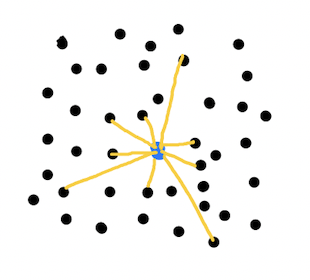
Centered on the current node, the number of connected nodes can be many or few, some far and some near. In the issue of route discovery, nodes also need seed addresses. For example, when a node starts, it first resolves the seed address record:
lookup("seek.domain")
    -> 127.0.0.1
    -> 127.0.0.2
Then sequentially requests the resolved node addresses to obtain the contents of their routing tables and adds them to its own. This is the usual approach, but it can lead to the node instantly acquiring the entire network’s routing information. This isn’t bad, just feels a bit fast. Meeting a person takes time, talking to people takes time, and you can’t talk to three people simultaneously. Even if you get many contacts, you can’t “multithread” and contact everyone. Our information processing “bandwidth” is limited, and so is the node’s. We can even slightly restrict the speed of network discovery, such as serially processing the action of adding records to the routing table: establish a connection with the node before adding information.
Slowing down route discovery may sound abnormal. Is it intended to keep the network out of sync? Many consensus bottlenecks are due to network bandwidth and protocol interaction complexity. Lowering the communication cost between nodes will also reduce the consensus’s fault tolerance. The network may be divided into different regions, forming various circles.
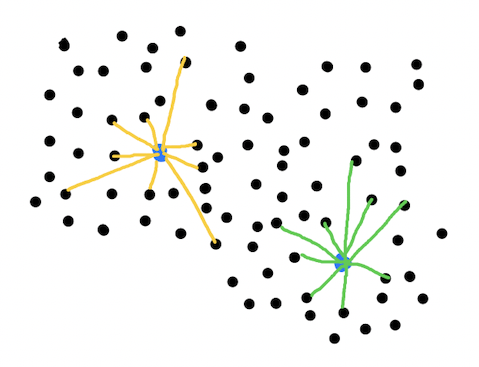
For consensus algorithms, partitioning is a problem to avoid, but network segmentation is natural and normal. Human thoughts are divided and possibly opposed, but they may agree after some events. Thus, network segmentation is entirely permissible, forming small interconnected or isolated networks. The key is having a mechanism to “correct” such splits, allowing segmented networks to merge under certain conditions.
Synchronizing Data
Active
The concept of the blockchain genesis block is retained here, with all nodes having the same first block. A newly joined node starts from the genesis block, while other nodes have higher block heights. For example, the current node’s block height is 2, and it wants to synchronize block height 3 from the network. The node’s routing table has addresses of other nodes, all with block height 3. The current node requests block height 3 sequentially from other nodes.
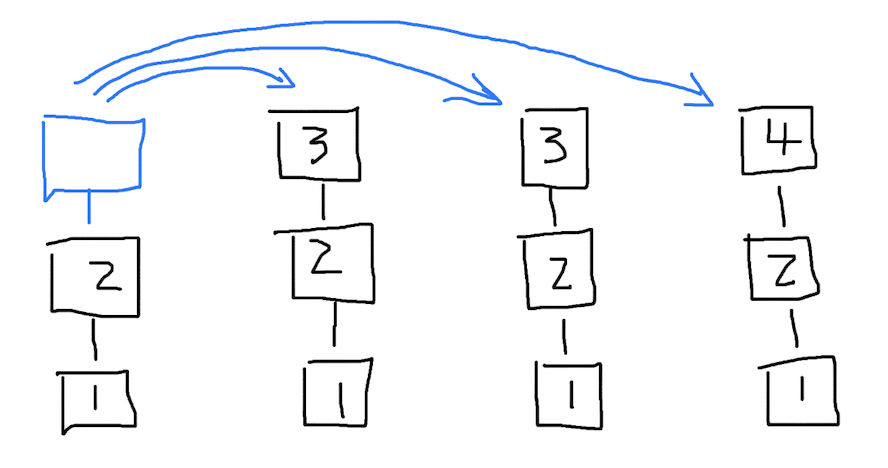
After the request, it finds that 2 nodes have identical blocks for height 3, with the same block content, hash, and previous block hash. The current node adopts this block as its 3rd block.
If some nodes have block heights greater than 3, should the highest block height be prioritized? Considering the time dimension, things should follow an order. You can’t skip 3 years and live as a 4-year-old. Blockchain data should also follow a sequence. The current node needs block height 3 and requests block height 3, regardless of other heights. Higher block heights don’t matter if you need height 3.
If each node’s block differs after all requests, whom should you trust?
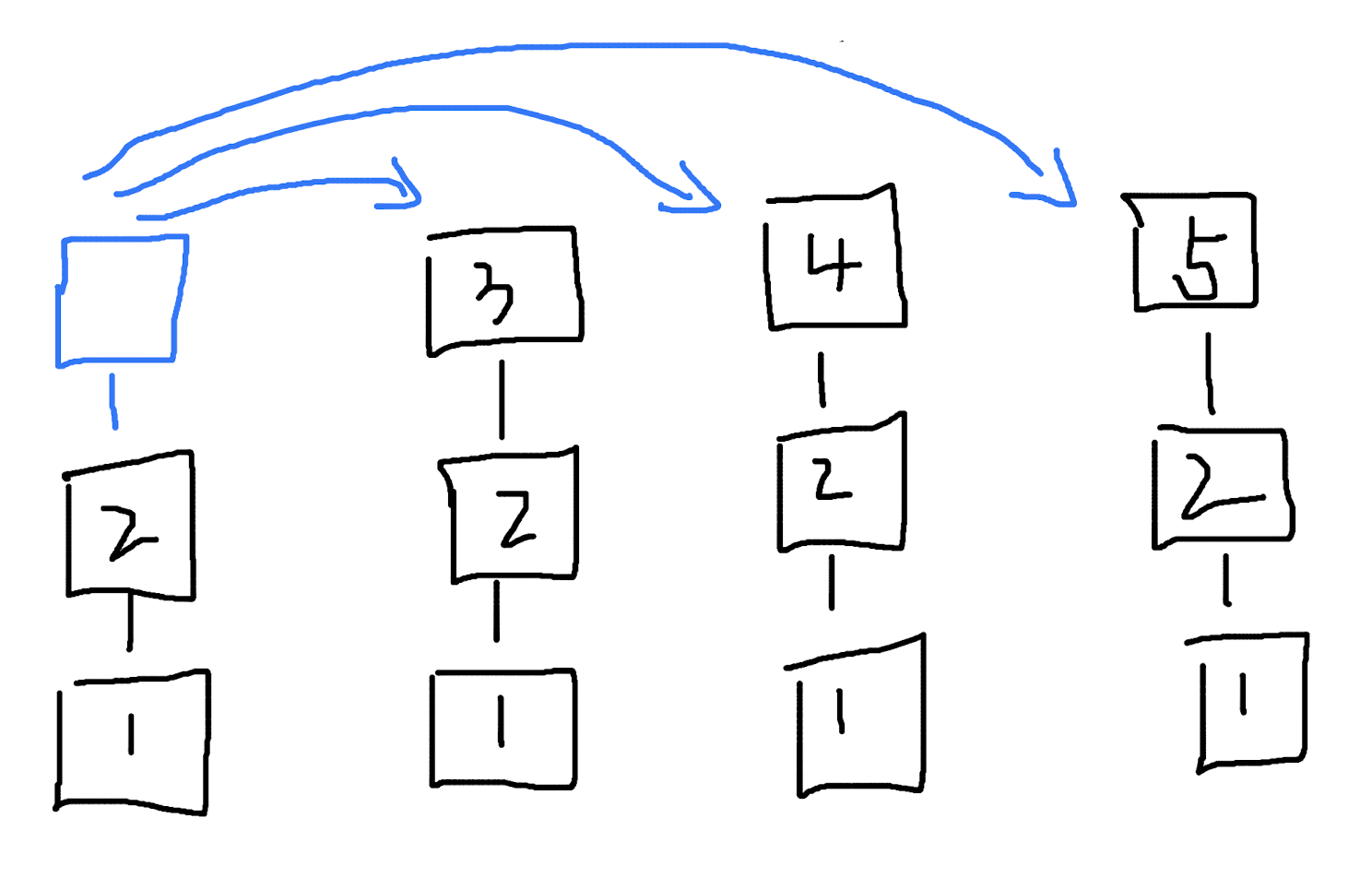
You have to choose one. If you can’t determine which node or content is trustworthy, choose randomly. Preferably the last requested node, as missed nodes are already missed. The last node is the closest, and you can’t judge if other nodes have identical content until then. After discarding previous nodes, the last node is the choice you can’t let go of.
For actively requesting block data, the key point is requests must be sequential based on the routing table. Before getting a response from the first node, no request is made to the second. You shouldn’t be too capricious. If a node deliberately speeds up and requests multiple sets of data simultaneously, it doesn’t matter. After all, it’s just synchronizing data. Some like it fast, some slow, some enjoy fast living, and some slow living.
Passive
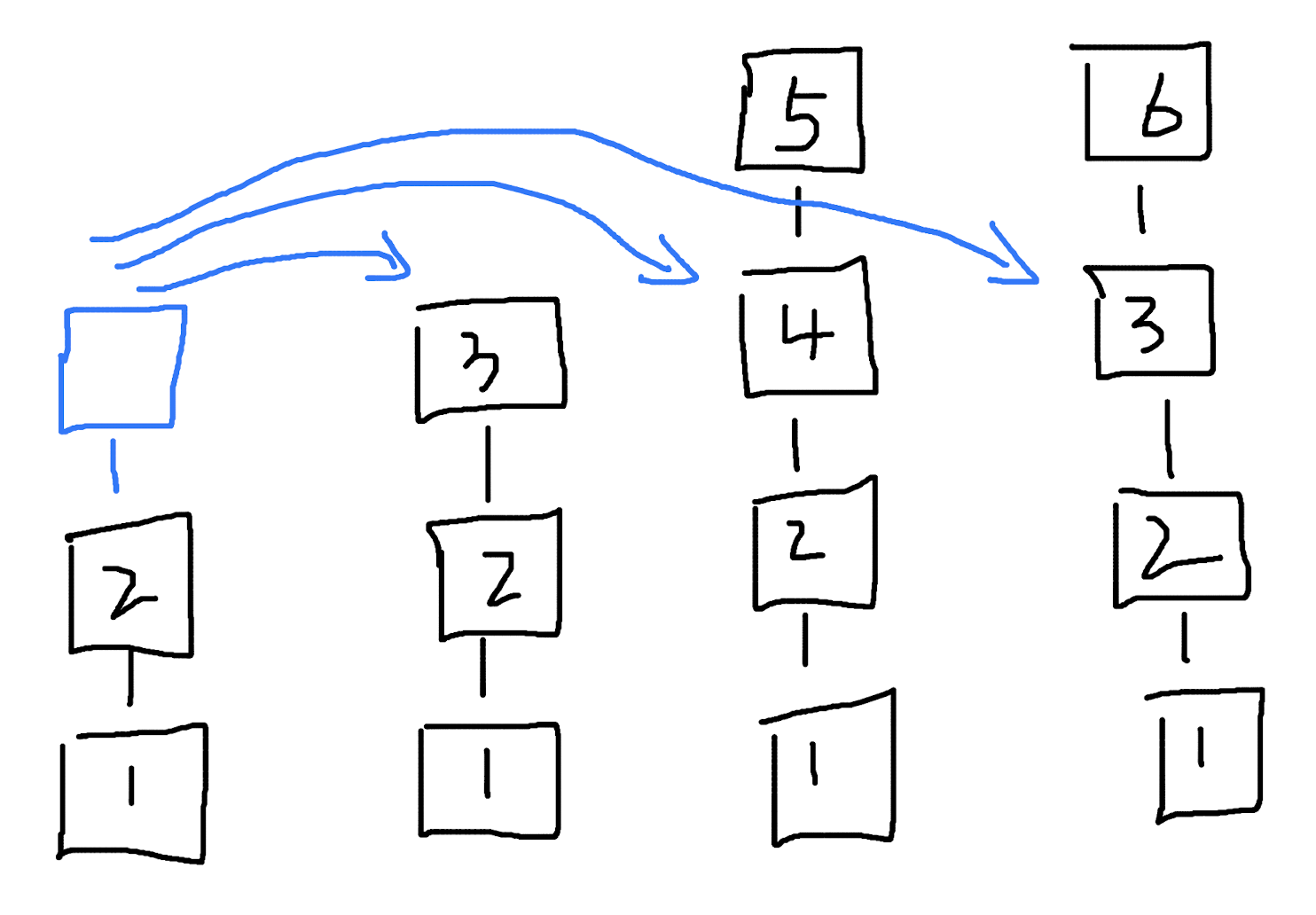
Besides actively requesting block data, nodes also receive broadcast messages from other nodes. For example, the current node’s block height is 2, and it receives blocks 3, 4, and 4 from other nodes.
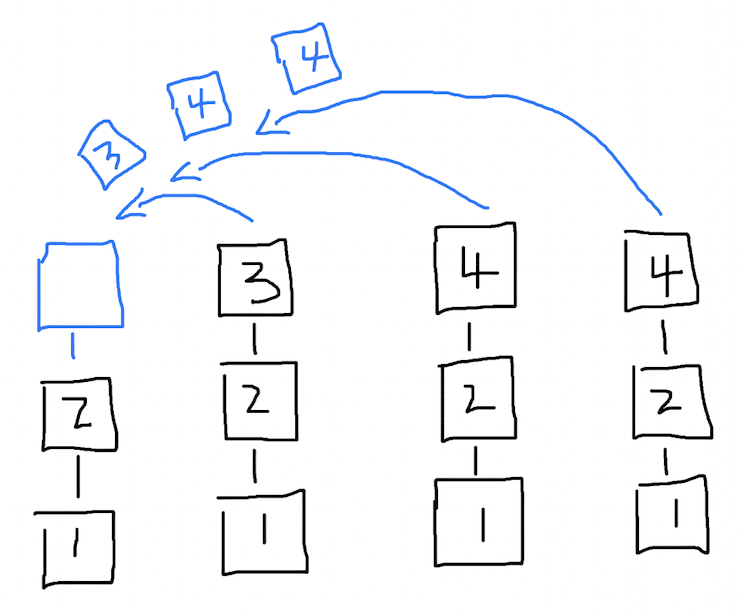
According to the majority principle, should it choose the content of block 4 as its 3rd block? But this has a problem: you can’t predict how many blocks you’ll receive, and you can’t calculate the total amount and proportion of block content. For passively received blocks, take the content of the first received block as the standard.
The order of arrival in life is important. If the required block height is 3 and the received broadcast block height is also 3, then take it. If not, replace it with a more suitable one later. If a node aggressively broadcasts the same block marked from 1 to high heights, hoping a node needing the block will receive it, let it be. Nodes actively synchronizing blocks request content by height, so this aggressive approach doesn’t yield much benefit.
Adding Data
Who generates data in the network? To solve this, we can define that every node can generate data. An extreme case is where everyone trusts only their data, playing solo, making the network a single-player version. So nodes need to spread their generated data, sending it to other nodes. For other nodes, it’s “passive data synchronization.”
A Node Needs It
Active block data broadcasting has two cases: a node needs the block, and you happen to send it.
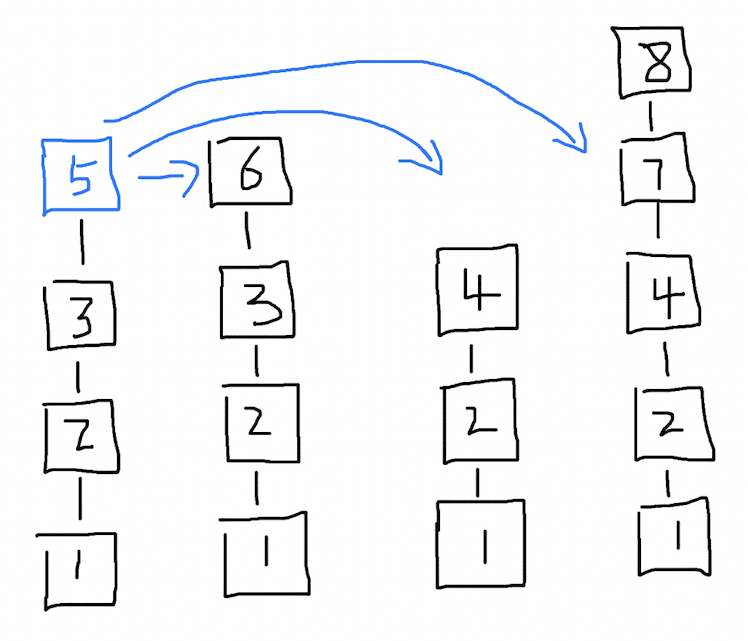
The current node receives a content request, adds block height 4, and directly persists the block to the main chain. It then starts broadcasting block height 4, sequentially through the routing table. The current node won’t pack the next block until the broadcast ends. If a node’s block height is 3, you are the first to send it block height 4, and it will accept your block and respond. After receiving the response, you know at least one node accepted your block, and you can continue with the next block. Of course, the node won’t stop broadcasting this round even if it gets a response. This is logical, hoping more nodes accept the block content.
If the receiving node finds the block content is 5 and the previous block hash is 3, not matching its previous block hash 4, it still accepts the block, replacing its blocks until the hash matches.
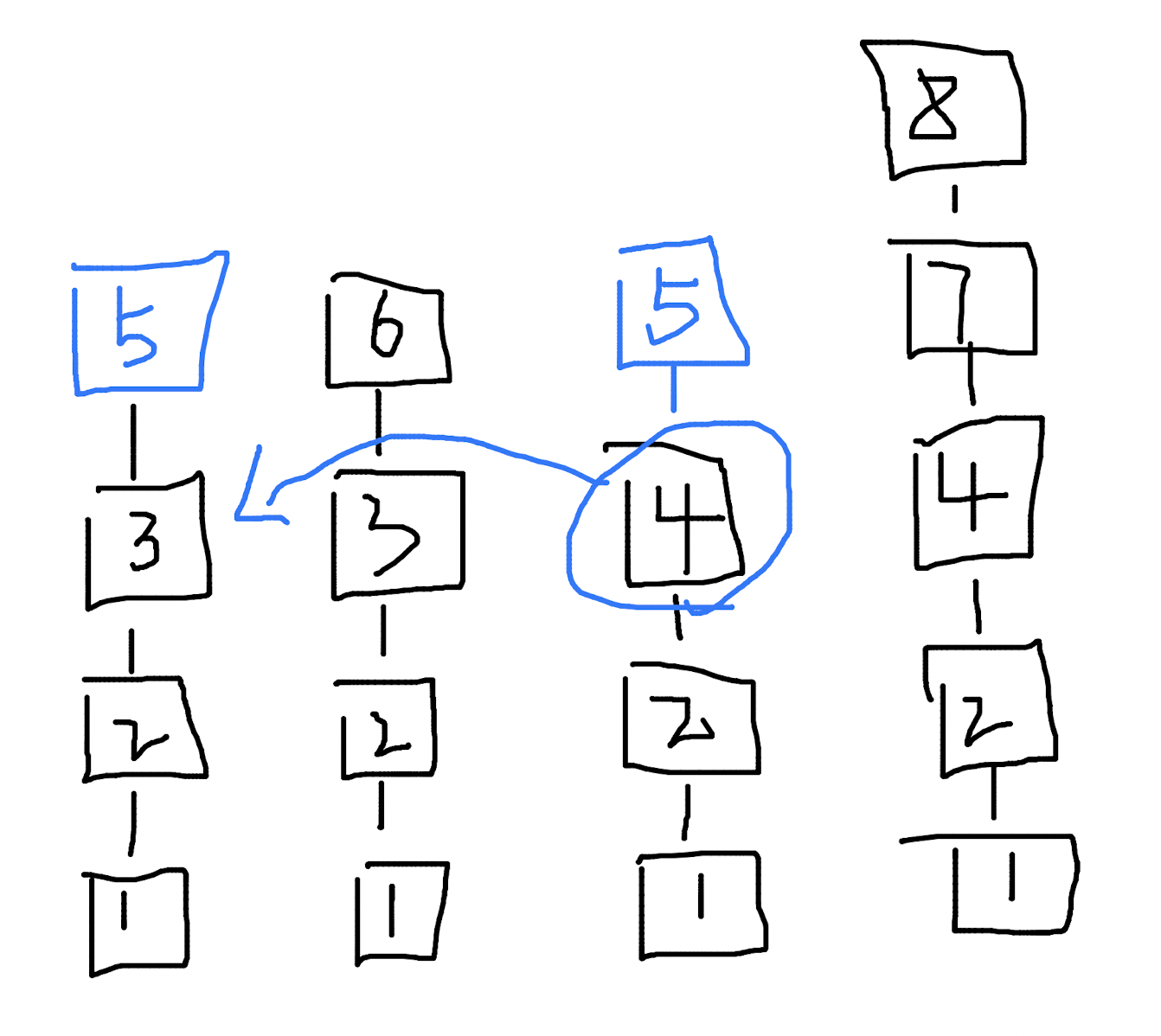
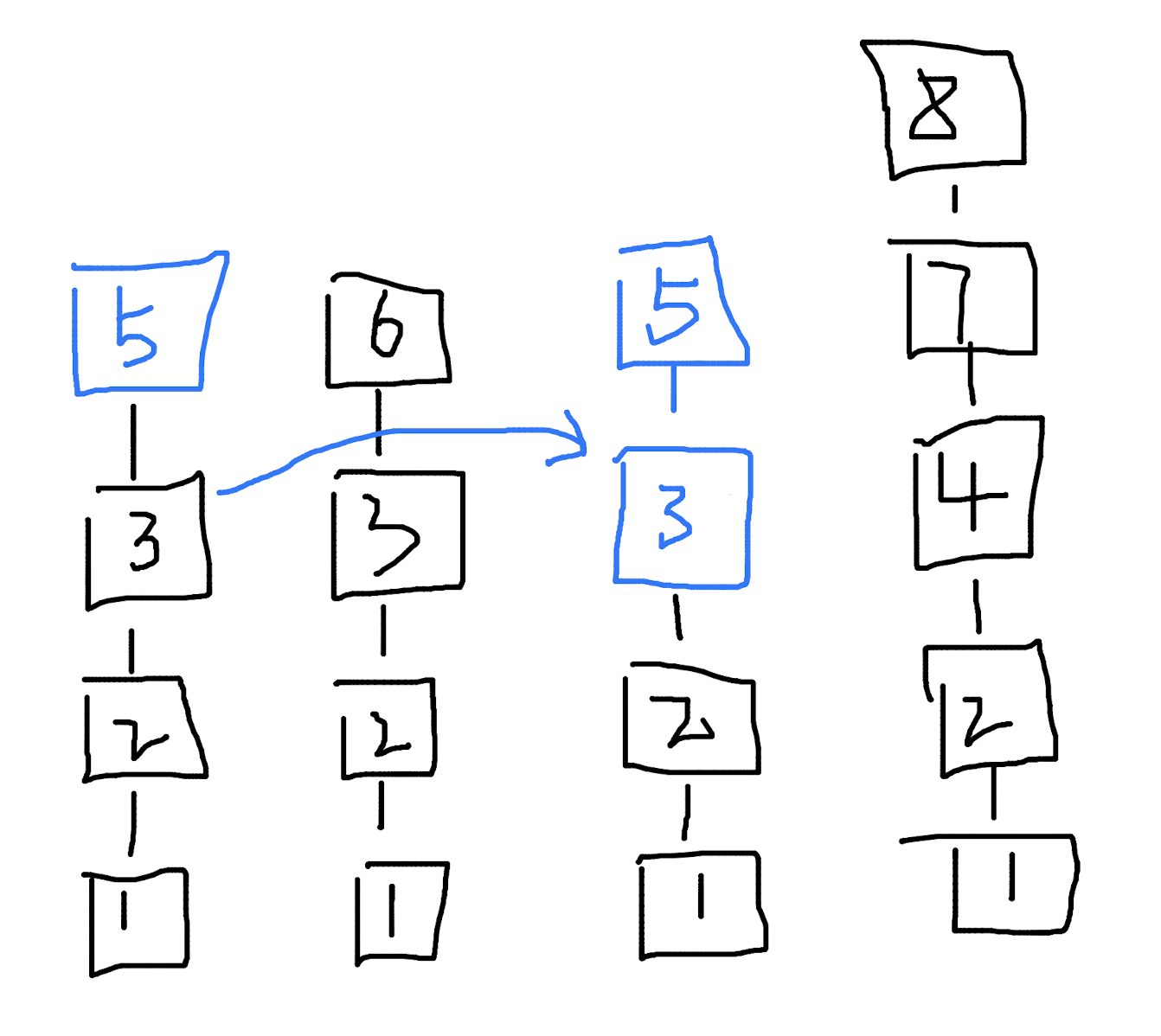
This mechanism risks replacing the entire chain after receiving a single block, an extremely serious and unacceptable cost. Yet the possibility exists. You encountered a bad actor who took advantage of you, overturned your values, and led you astray until you no longer recognized those closest to you. You should reflect on why such a bad actor was in your routing table. And are there many of them? Even if one malicious node replaces your entire chain with a single block, there is a high probability that a good node will subsequently restore it to the state shared by the majority.
This exposes a problem: is it too hasty to accept the first block received? What if it comes from a malicious node? To make attacks harder, when a node receives block 5 and finds that its previous-block hash does not match, it should not request history from only the first peer. It should run the complete active synchronization process, querying every peer in its routing table by block height. If block 5’s previous hash disagrees with most nodes, discard block 5. If it agrees with the majority, it is not harmful content.
No Node Needs It
After adding a block, a node may discover that no peer needs a block at its current height.
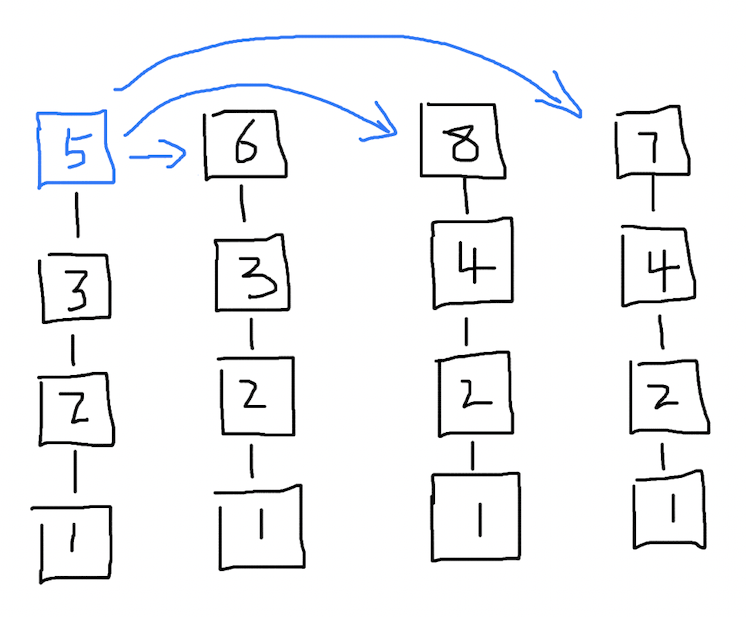
Every other node’s block height is greater than or equal to the height being broadcast. In that case, the current node must compromise slightly. To make others accept it and its block data, it first synchronizes from another node so that it becomes consistent with them.
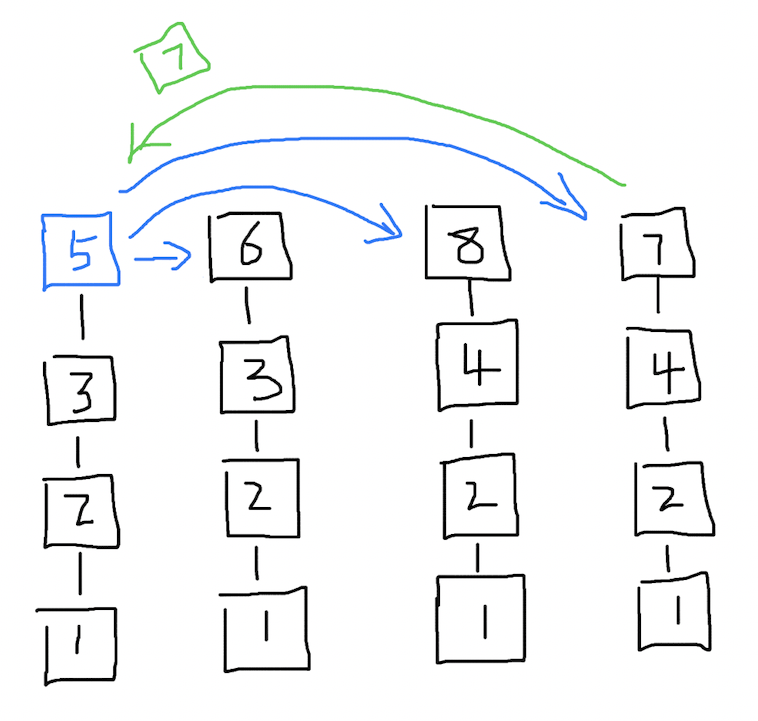
At block height 4, the current node broadcasts its block to everyone and finds that nobody will accept it. It then requests the block at the same height from the last node it contacted. Why the last node? It could run the full active synchronization process, but to improve efficiency and reduce network traffic, it can first accept an arbitrary block and evaluate it afterward. The last node is chosen because it is close. After missing all the noise and distractions of the world, you suddenly look back and realize that the last node is now your closest companion.
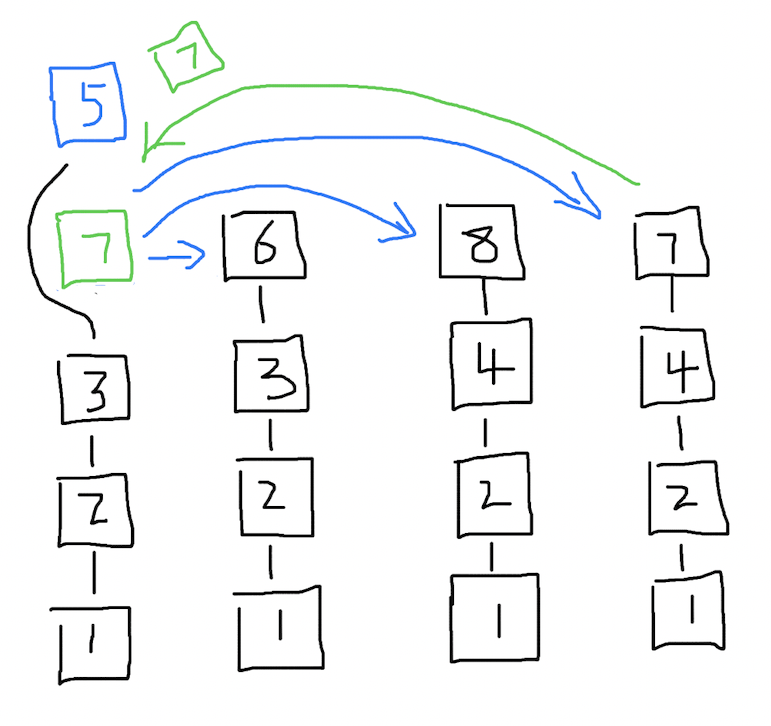
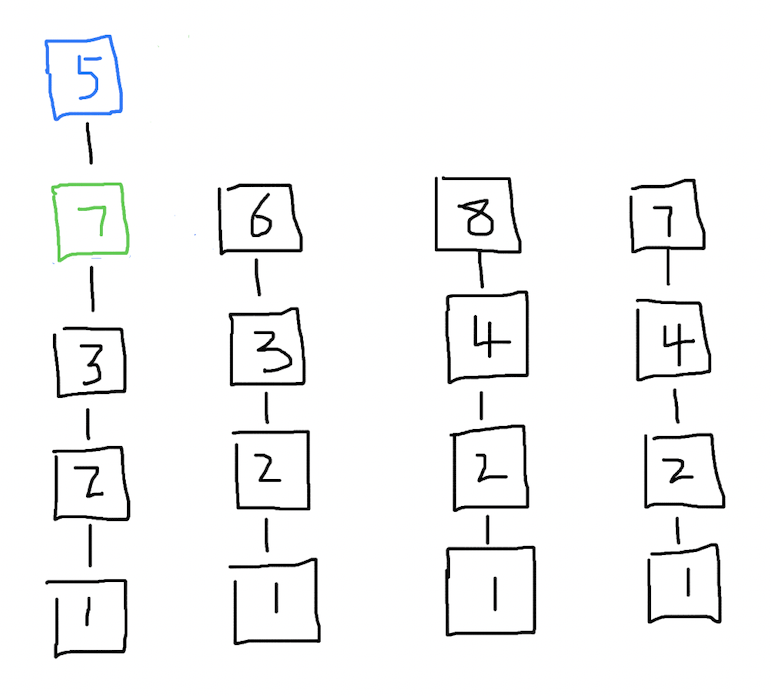
After receiving block 7 from the last node, the current node continues broadcasting its own block 5.
If every other node is unfortunately far ahead, then the current node truly has fallen behind and should synchronize their content first. Before trying to innovate or add new content, it must at least reach some kind of frontier.
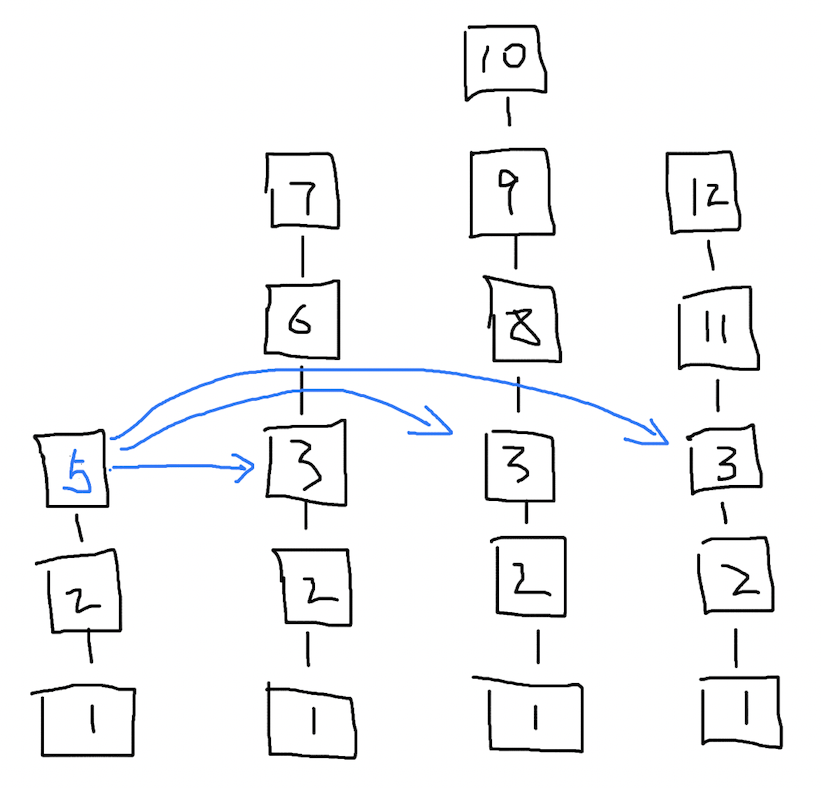
It does not have to be the frontier of the entire network, only the frontier of some circle within it.
Exchanging Data
Network Shapes
Under the mechanism described so far, the network may be chaotic and unsynchronized. Synchronization is deliberately assumed to be slow, but what if some nodes prefer speed, using faster computation and more bandwidth to reach the leading edge of the network?
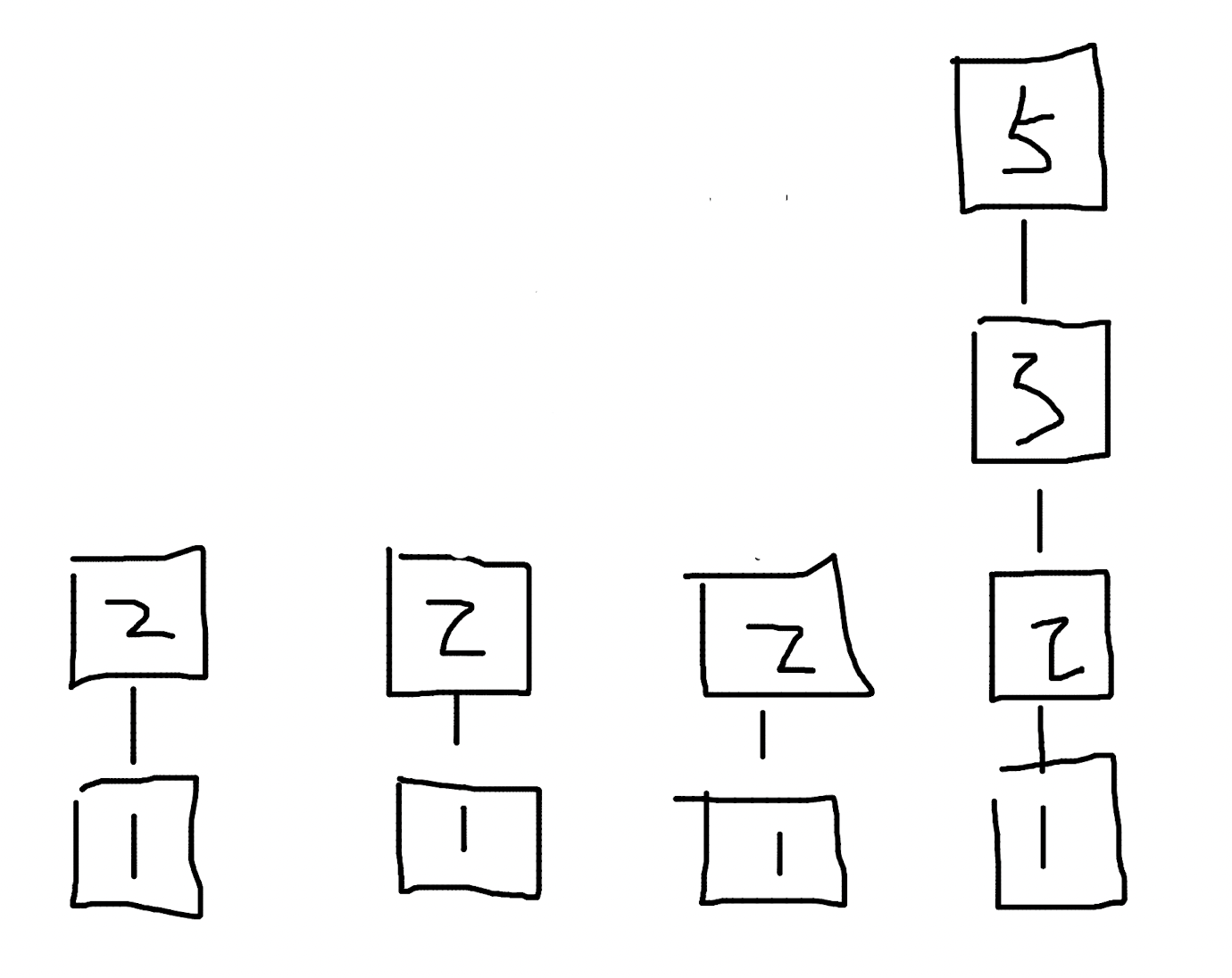
This creates a network where most nodes are slow and a few are fast. Every node updates and broadcasts by block height, which alleviates the problem to some extent. If you want to move fast, go ahead; it has nothing to do with us. The slow nodes form their own group and follow majority consistency rather than blindly following whoever has the greatest height. Compete as aggressively as you like—we will not play that game.
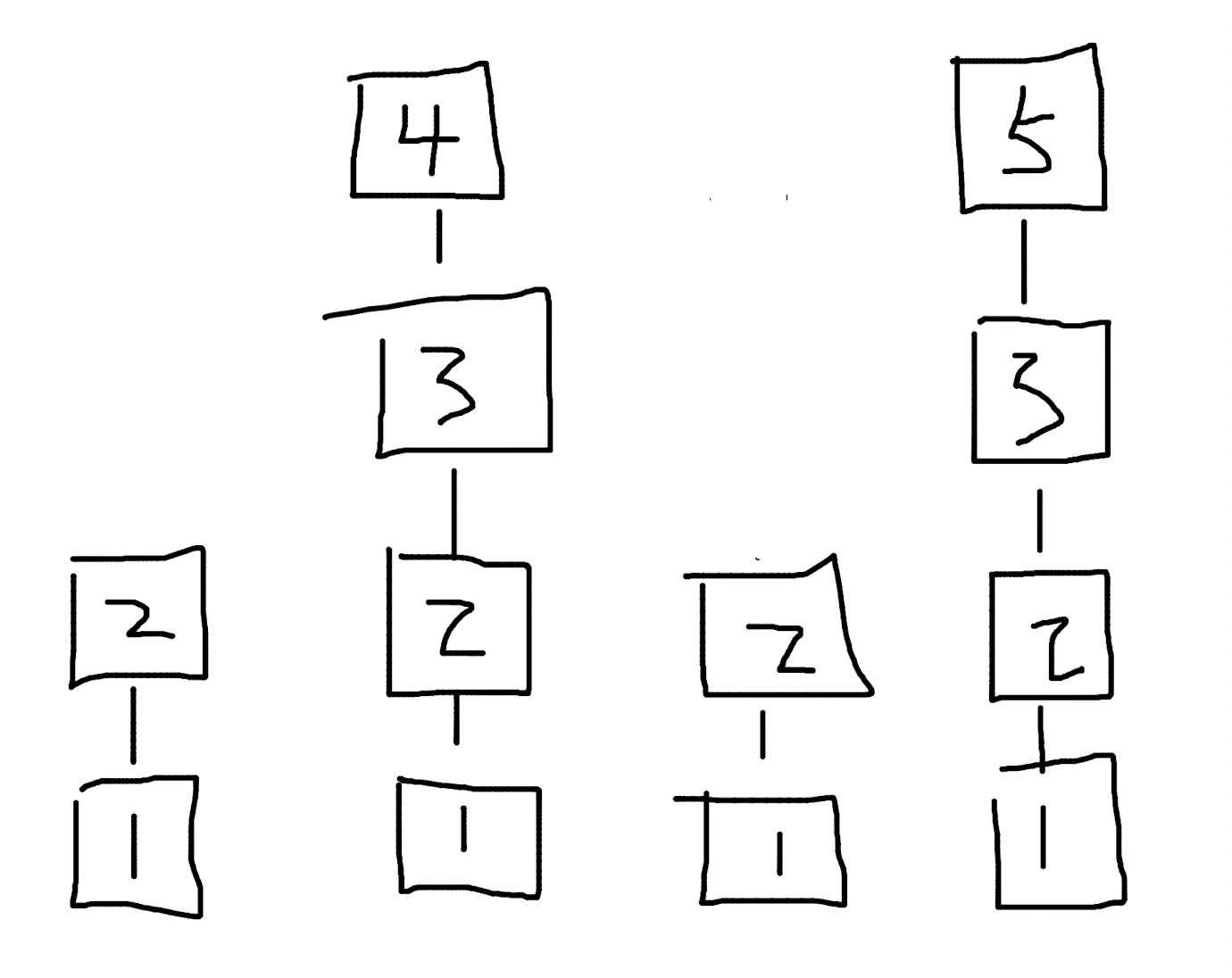
Another possibility is that half the nodes are slow and half are fast. There is little to fear; at worst, they form two separate networks.
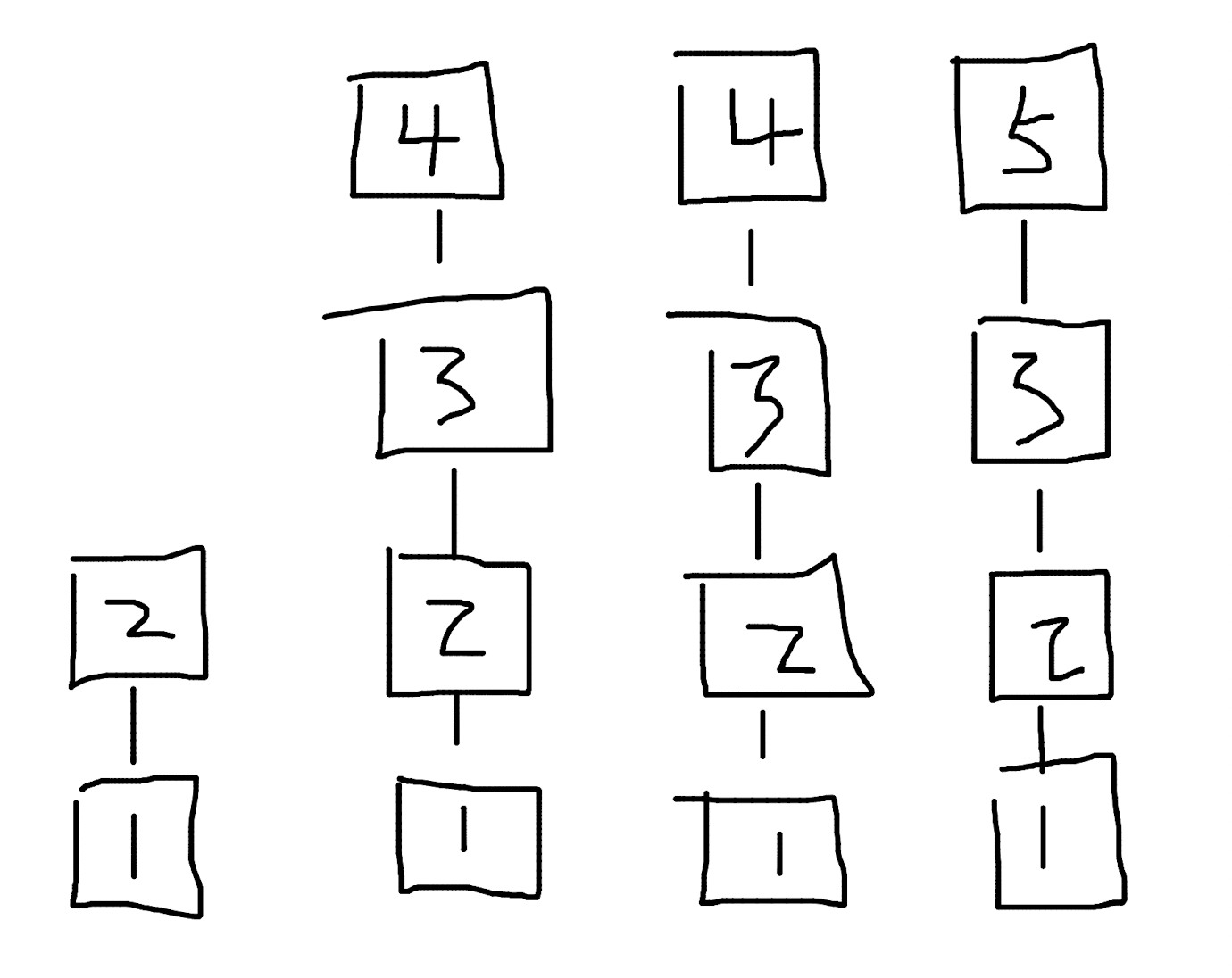
The most ordinary case is a few slow nodes and a fast majority.
Merging
When half the nodes are slow and the other half are fast, conflicting data can easily emerge. Even at the same block height, the two groups may hold different content.
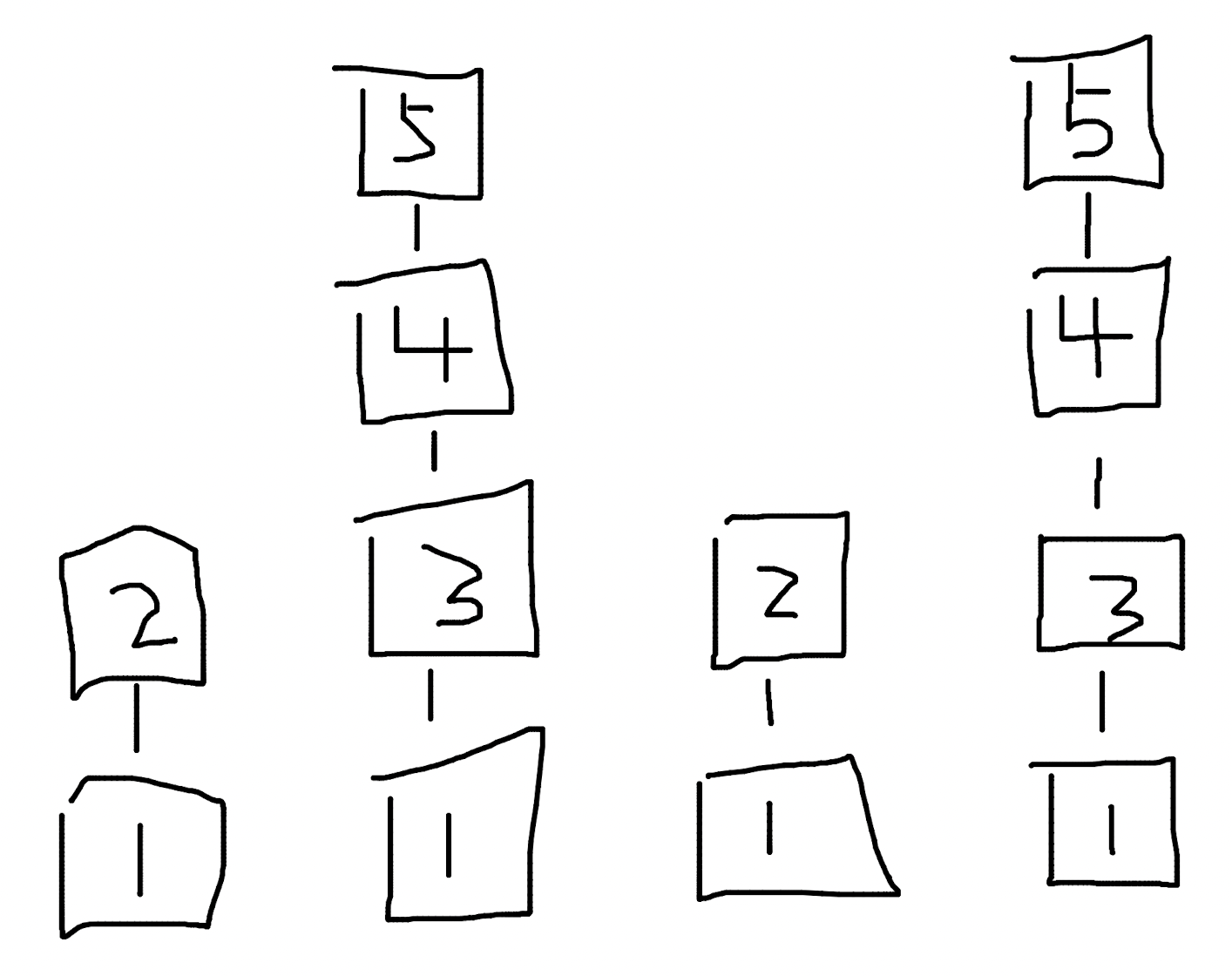
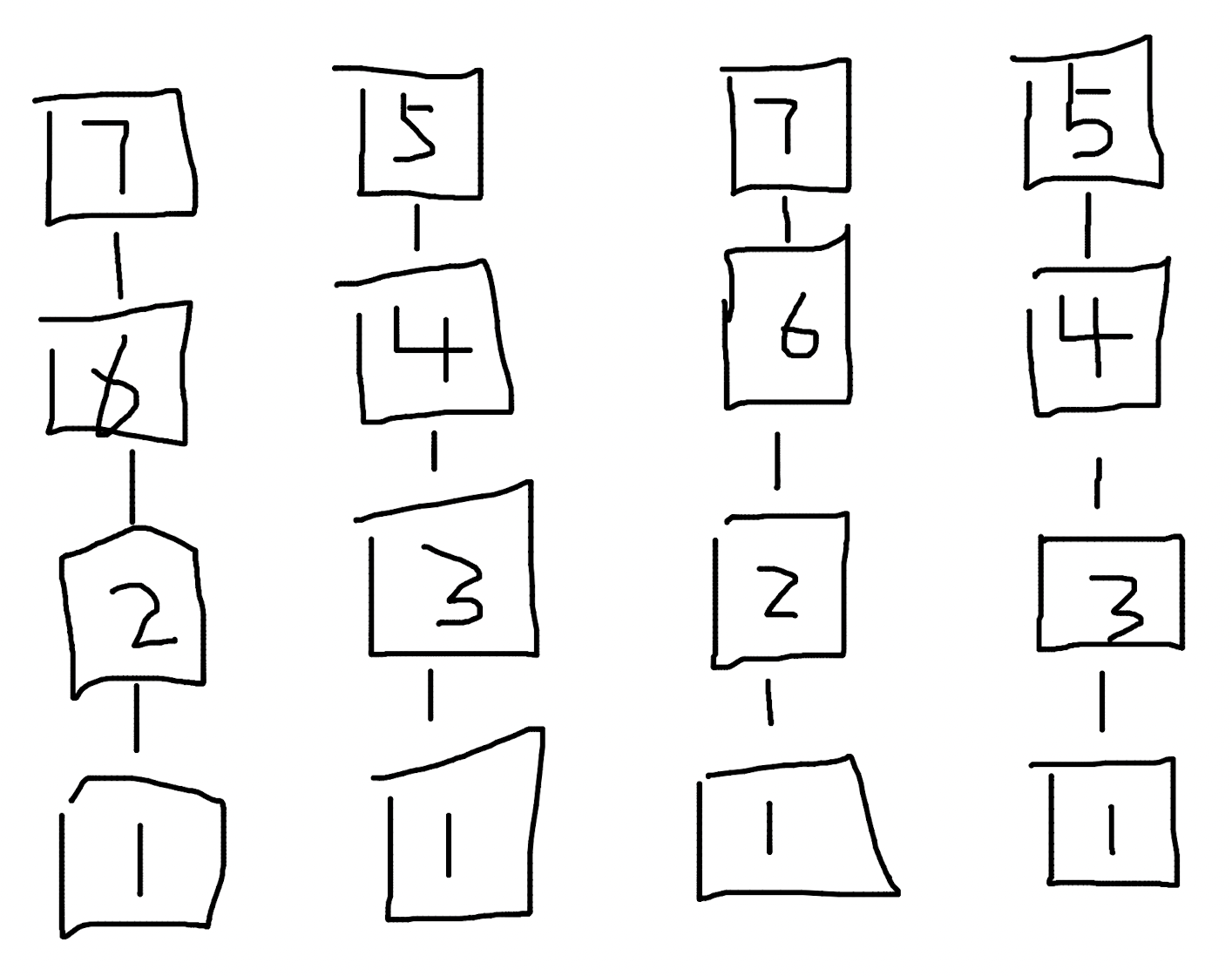
At that point one side must compromise. If the two networks want to merge, one of them must sacrifice something. Suppose their routing tables become connected while their block heights are equal. When new block data are produced, the process is effectively the active broadcast procedure. The current node first produces a block:
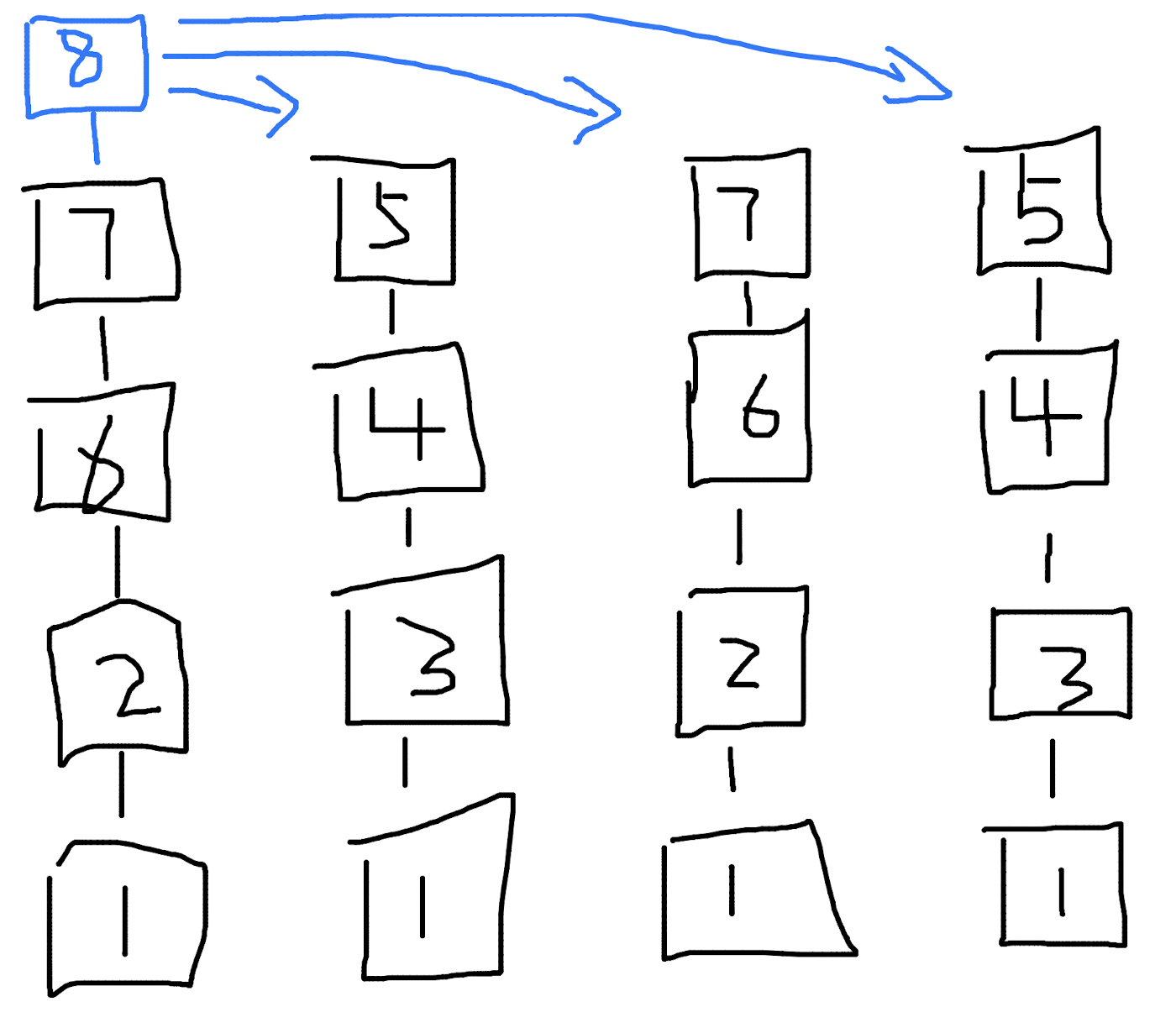
For example, the last node receives the block and discovers that its previous-block hash does not match its own:
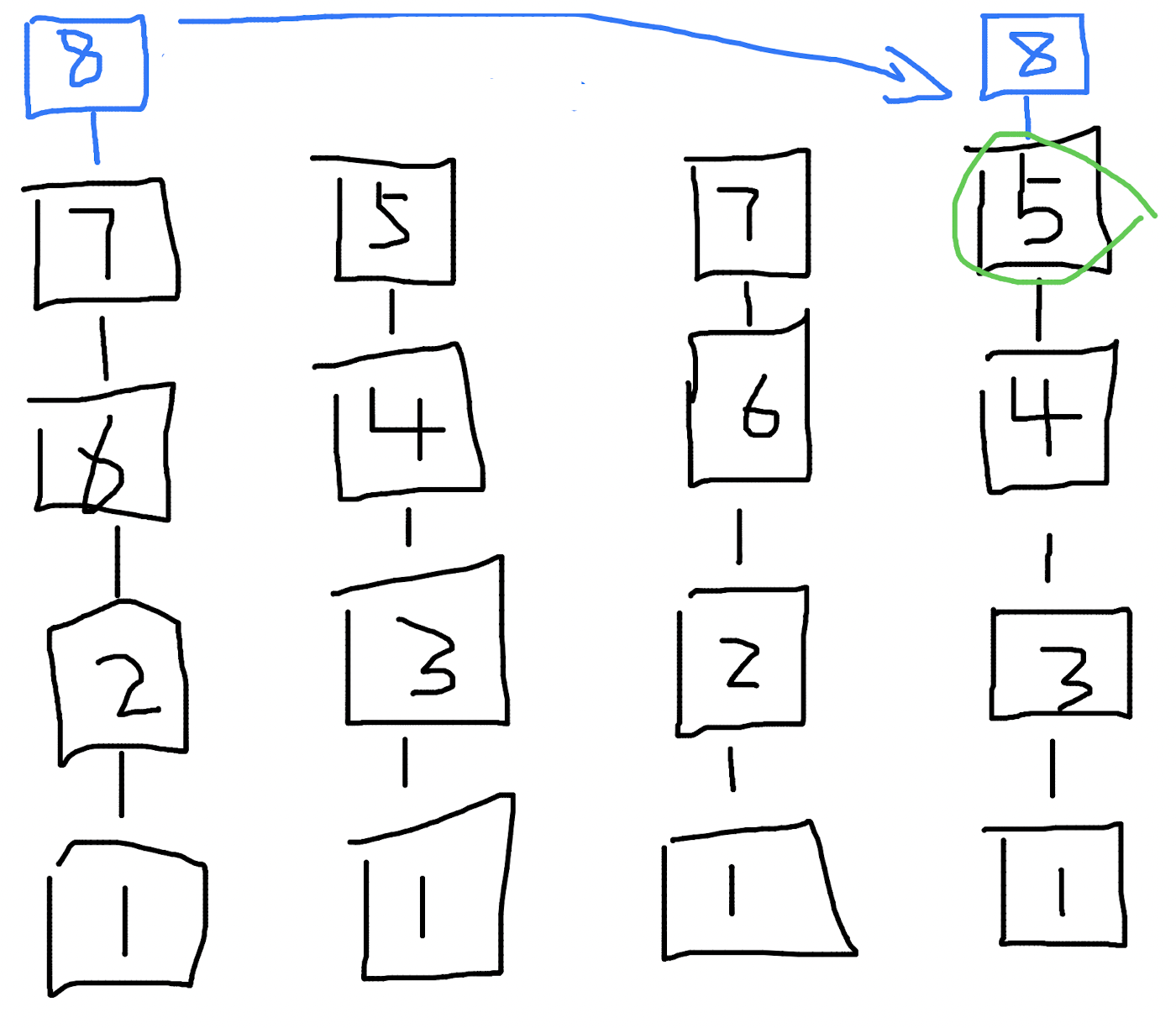
It requests the preceding block height from other nodes:
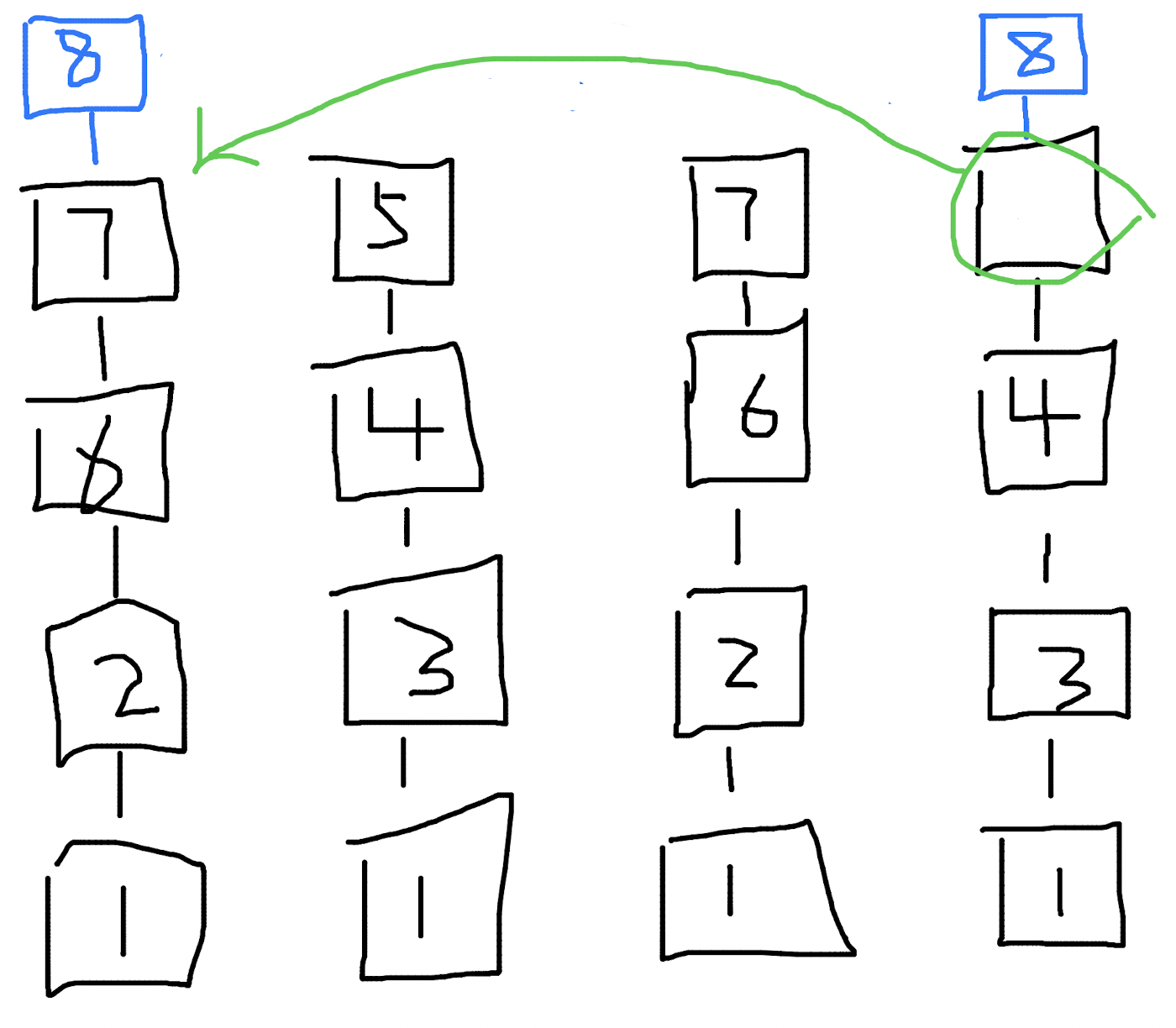
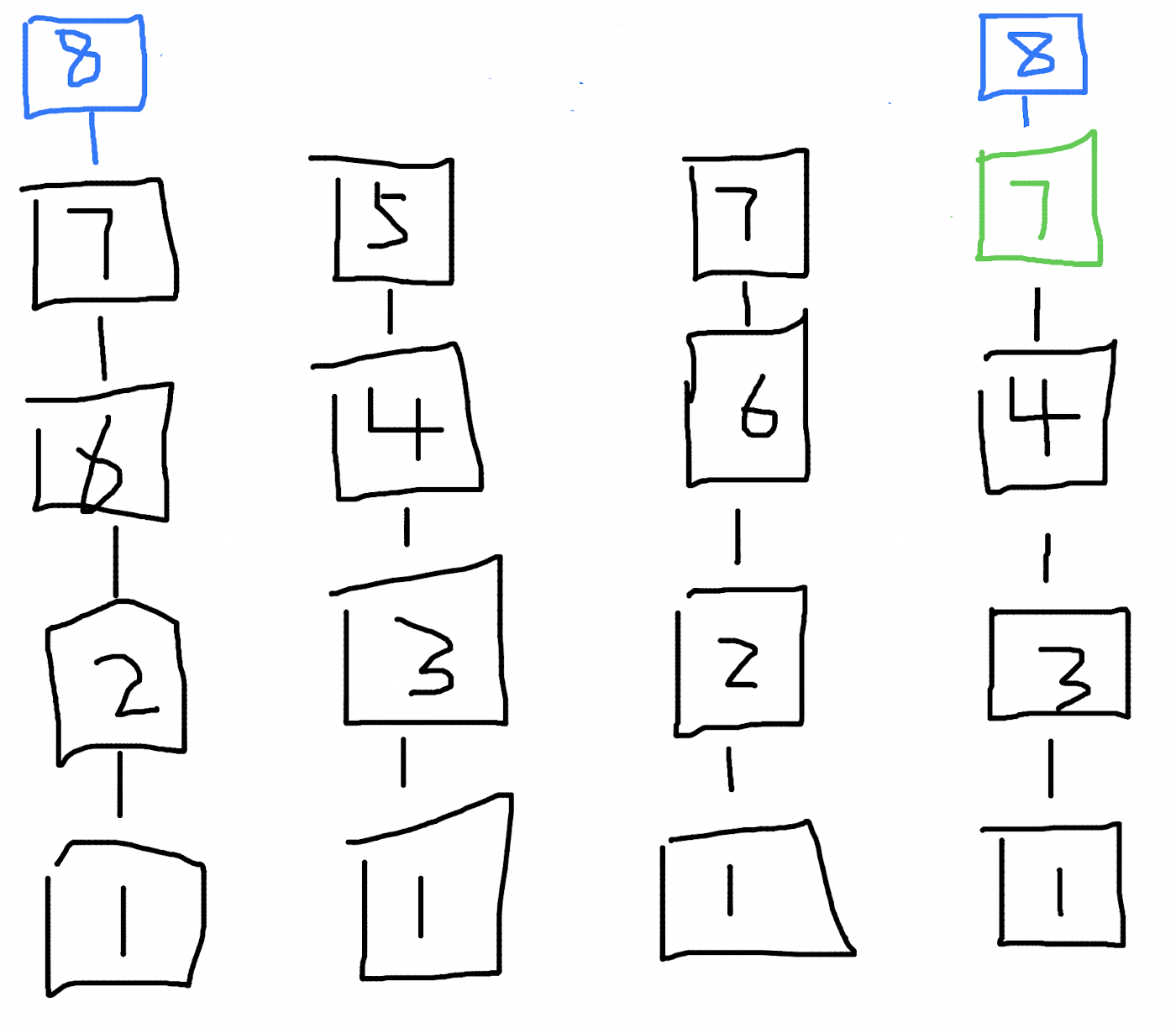
It then discovers that the hash of the block before that also differs:
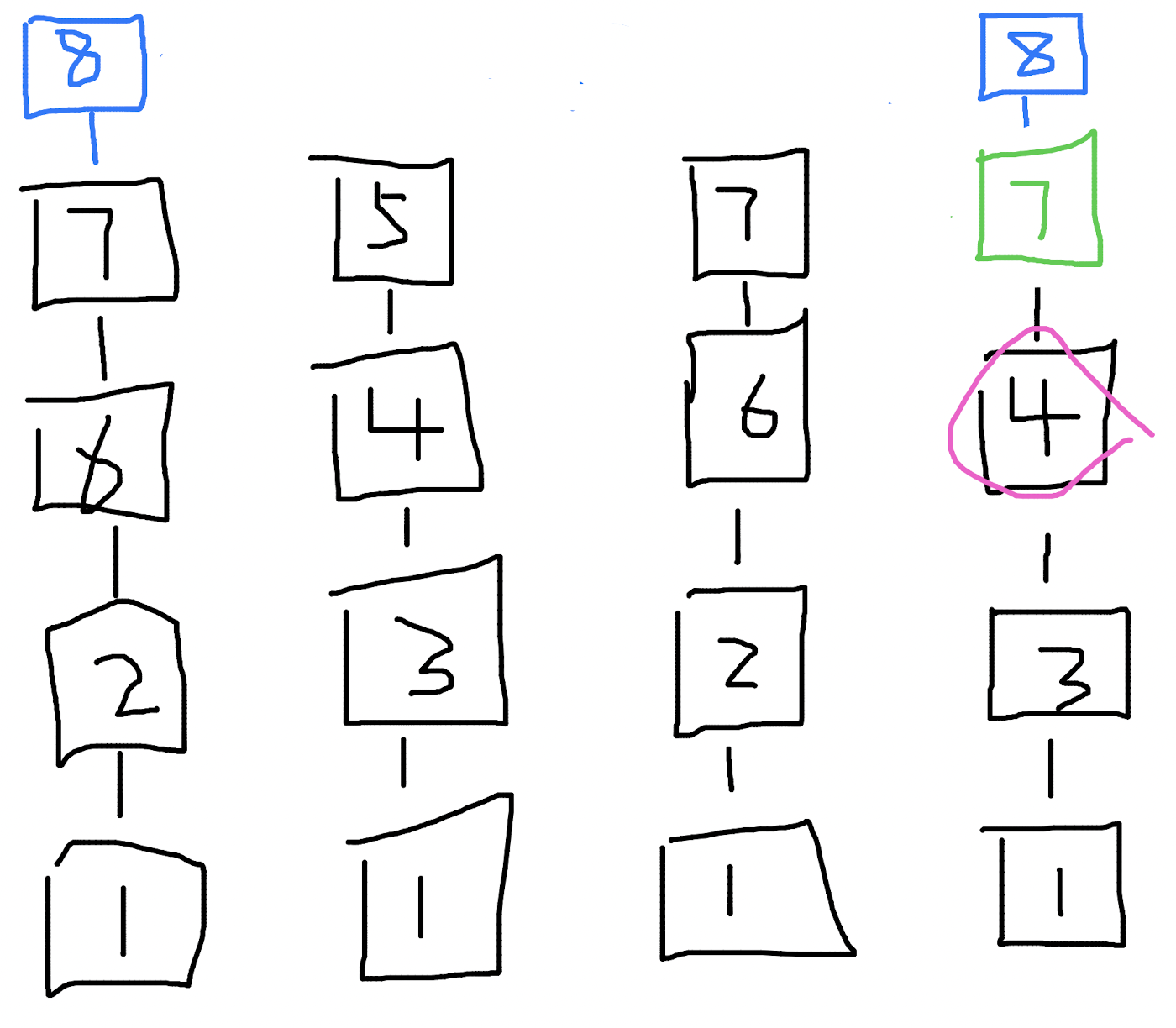
So it continues requesting the corresponding height from other nodes:
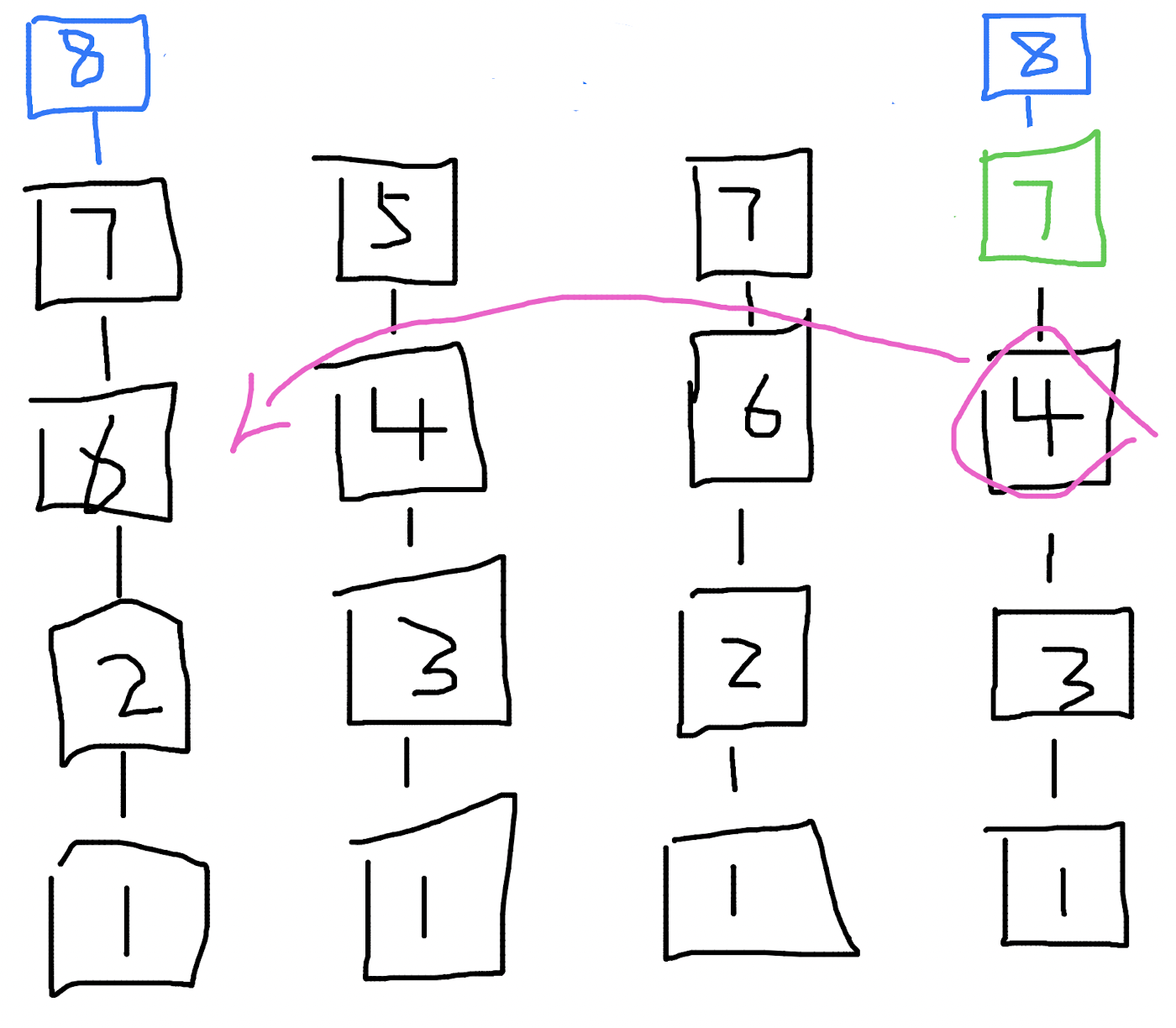
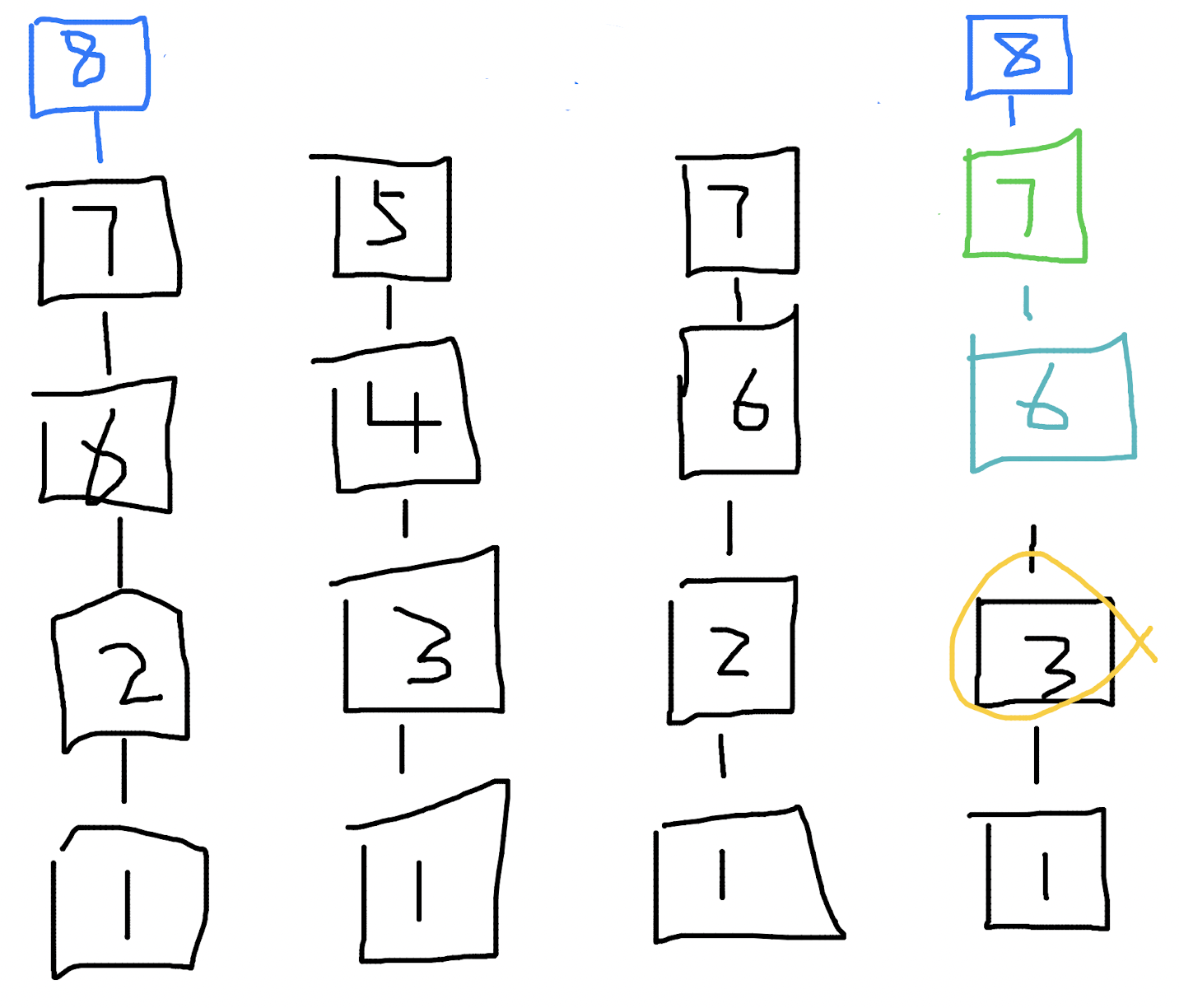
The process repeats until the entire chain is identical.
Replaced block contents can be placed in a cache queue and reused as the contents of new blocks, then broadcast again, reducing the loss of node-generated content.
Conclusion
This is an idea for a consensus mechanism that has not been tested in practice and cannot easily be modeled with formulas. Consensus begins from the node’s own position and asks how it should respond to the different behaviors of other nodes, rather than designing the interaction protocol from a godlike perspective over the whole network. Such a mechanism introduces uncertainty, but also many possibilities. We can consider only the basic rules of node behavior, just as we learn the rules of life. It is difficult to predict where the network will go, just as we cannot predict the direction in which the world will develop. This mechanism does not—and perhaps cannot—solve a specific problem such as building an electronic cash system or providing a Turing-complete execution platform. It operates at a more fundamental level, offering a method and a way of thinking about data consistency.
The virtual world formed by computers connected through networks must be fascinating too.